
Why Women’s Desire Fluctuates—and Why That’s Completely Normal
As a sex therapist, something I hear women and those with uteruses say in sessions often is “I wish I could just have a more consistent sex drive”. While I want to honour my client’s needs, what I find most helpful in the early stages of speaking to women about their sexual needs is to bust the myth that our sex drive is consistent. I am here to tell you that it is not.
The belief that we have continual, un-fluctuating desire comes from a male-centred way of understanding desire. Men typically have a more stable hormonal cycle, which leads to a more stable libido. Since women’s experiences are often measured against masculine models of desire, this can lead to a pathologizing of women’s libidos, and a lack of understanding of how their cycles and hormonal states can impact levels of desire.
Women or those who identify as non-binary or trans people who have uteruses have fluctuating hormones on a monthly basis that are relatively predictable. These fluctuations mean that our desire can also fluctuate, as hormones play a key role in arousal.
Other life transitions and hormone-related disorders such as PCOS (Polycystic ovary syndrome), perimenopause and menopause can lead to changes in hormonal levels, which have shown to contribute to lower desire. Physical symptoms of vaginal dryness and vaginismus (pain with sex) can also lead to an avoidance of sex, or low desire.
Hormones & the Menstrual Cycle

Below is a simplified way of looking at how phases of women’s cycles may impact our desire and how we relate to our bodies.
Follicular Phase
- Rising estrogen
- Increased energy, confidence, curiosity
- Often increased desire
Ovulation
- Peak estrogen/testosterone
- Heightened libido, fantasy, attraction
- Feeling more embodied and social
Luteal Phase
- Rising progesterone
- Desire may soften or turn inward, feel lower or less of a priority
- Increased need for safety, reassurance, slower intimacy
Menstrual Phase
- Lower hormones
- Desire may be low or deeply sensual, increases sensitivity in genitals
- Increased attunement to the body
Desire Is Contextual, Not Just Hormonal

Having an understanding of how hormones impact sex drive is essential for women to begin to embrace the cyclical nature of their desire, rather than seeing it as sexual dysfunction. In addition to hormones, other circumstances such as sleep, caretaking, stress, new parenthood, perimenopause, menopause, past trauma and resentment about unequal labour can all impact desire.
Emily Nagoski talks about the accelerators and brakes of sex, which either turn up or turn down our levels of desire. Some people feel lower desire when they are stressed or anxious, while others feel higher desire in times of stress. Care taking requires physical, mental and other reserves, which may lead some people to feel low desire when it comes to the energetic out out sex can require. However, this is another myth specific to women, which is that women are to perform, provide and entertain our partners during sex. Receiving pleasure as a form of care from our partners often comes with mixed feelings of guilt, shame, or pressure to “hurry up”- none of these emotions tend to get our sexual engines running.
Understanding out accelerators and brakes, especially as women and those with uteruses is essential in embracing our desire as a fluctuating mechanism. This mechanism is feedback for where we are at on a broader scale in life. Are we stressed? Tired? Overwhelmed? Often attending to these others areas of life first can impact our levels of sexual desire without going out and buying all of the newest toys (although, this can’t hurt and is fun!).
Spontaneous vs Responsive Desire
Another myth driven by the male model of desire is that all people, regardless of gender, should spontaneously feel like having sex. While spontaneous desire more common in men or those with penises and testes, women and those with uteruses tend to have more responsive desire. While spontaneous desire might looks like a sexy thought suddenly popping into your head, responsive desire looks like becoming aroused after a kiss, or a caress, or an intimate exchange in the kitchen. Responsive desire comes from something, while spontaneous desire can arise out of no where.
While some women definitely experience spontaneous desire (especially during the follicular and ovulatory phases), they are more likely to experience responsive desire. Something I work on with my uterus-possessing clients is the idea that it is likely they will require more stimulation (mental or physical) to get in the mood, and that’s ok! They will also need to consider how their environment supports or deters their desire, such as feeling too cold to get naked, having children in the next room over, or having an unfolded pile of laundry waiting for them. This last one also highlights the feelings of resentment some women may have around them feeling like their partner does not contribute to the house hold as much as they do- another real desire-killer.
Mental Health and Desire

Anxiety, depression, postpartum challenges, grief, and other mental health concerns are all linked to reduced desire. These experiences can lower energy, confidence, self-esteem, and access to pleasure. When we don’t feel good in ourselves, it’s common to pull away from sex, both with others and alone, as a way to avoid parts of ourselves that feel heavy, vulnerable, or shame-laden.
Additionally, SSRIs, which are among the most common anti-depressants often have reduced sexual desire as a side effect. If you are experiencing low desire as a result of being on SSRIs or other anti-anxiety or depression medication, you can always consult with your doctor about altering your dose, or the brand to see what impact it has on your sex drive.
Embodied Understanding of Desire
All of what I’ve spoken about thus far involves getting to know yourself as a sexual being. Being attuned to your levels of desire during your cycle, understanding your accelerators and brakes, and tuning into what you need to evoke responsive desire all invite you into your body.
Do you feel safe in your body? Perhaps this is where you start. Perhaps beginning to explore responsive desire on your own with self-touch feels more accessible. If you have experienced sexual trauma, it might be useful to get support from a sex therapy-related psychotherapist who can help you work through it. If you have a partner, let them know about what you’re learning, and bring them into this new understanding of your sexuality.
Other ways of understanding your desire and how your cycle impacts it can be journaling or tracking desire day to day, and also tracking stress, sleep, social connection, hormonal fluctuations, and other factors that contribute to your accelerators and brakes. Over time, connections between desire levels and life, environment, hormones and relationship quality will emerge.
Unlearning and Remembering Our Own Wisdom
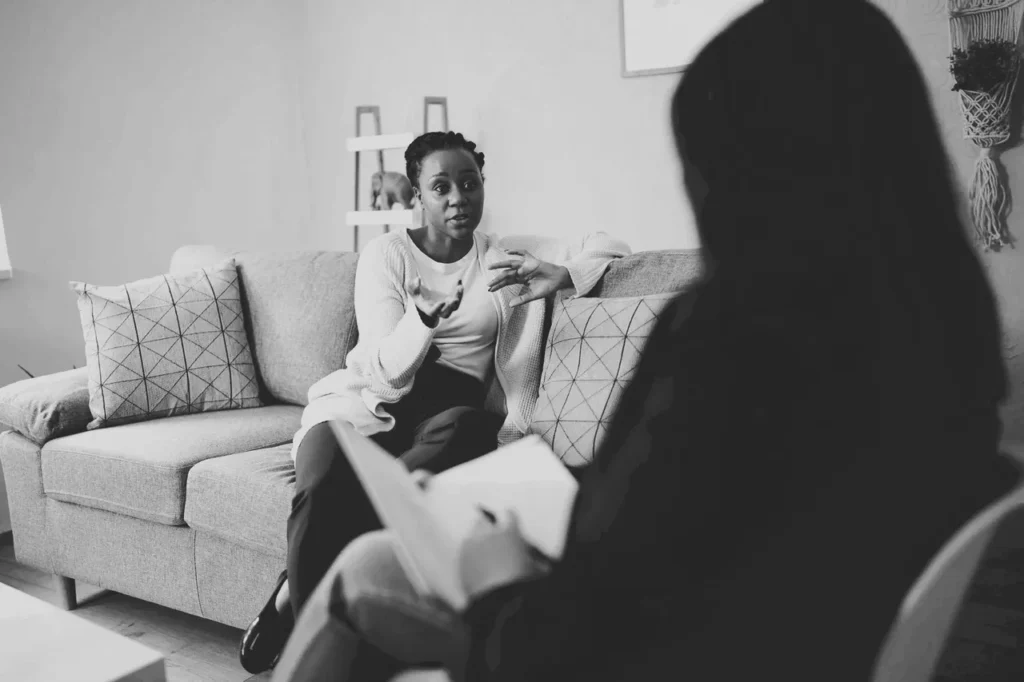
Busting the myths that contribute to women feeling as though our desire must be constant requires an unlearning of what women have been told about our sexuality, and a re-orienting back to our body’s wisdom. Through our own discovery, we can share our needs more explicitly with our partners, and discover how this can lead to a much richer and fulfilling sex life.
You are not a robot, you are a full human ebbing and flowing with the tide of your body, and your environment. Wouldn’t it feel good to allow your desire to be part of that flow rather than demanding that it stay constant, despite the rest of your life existing in this cycle?
If you are struggling to feel connected to yourself as a sexual being, or are experiencing low desire and want this to change, sex therapy can be a helpful tool to learn about yourself, your beliefs (or those of others that are influencing your beliefs) and how to embrace the waves and changes of your desire.
Connect with me if you are curious about how to live a more sexually fulfilling life, and let’s see about exchanging some of these myths with the truth and wisdom of your body.